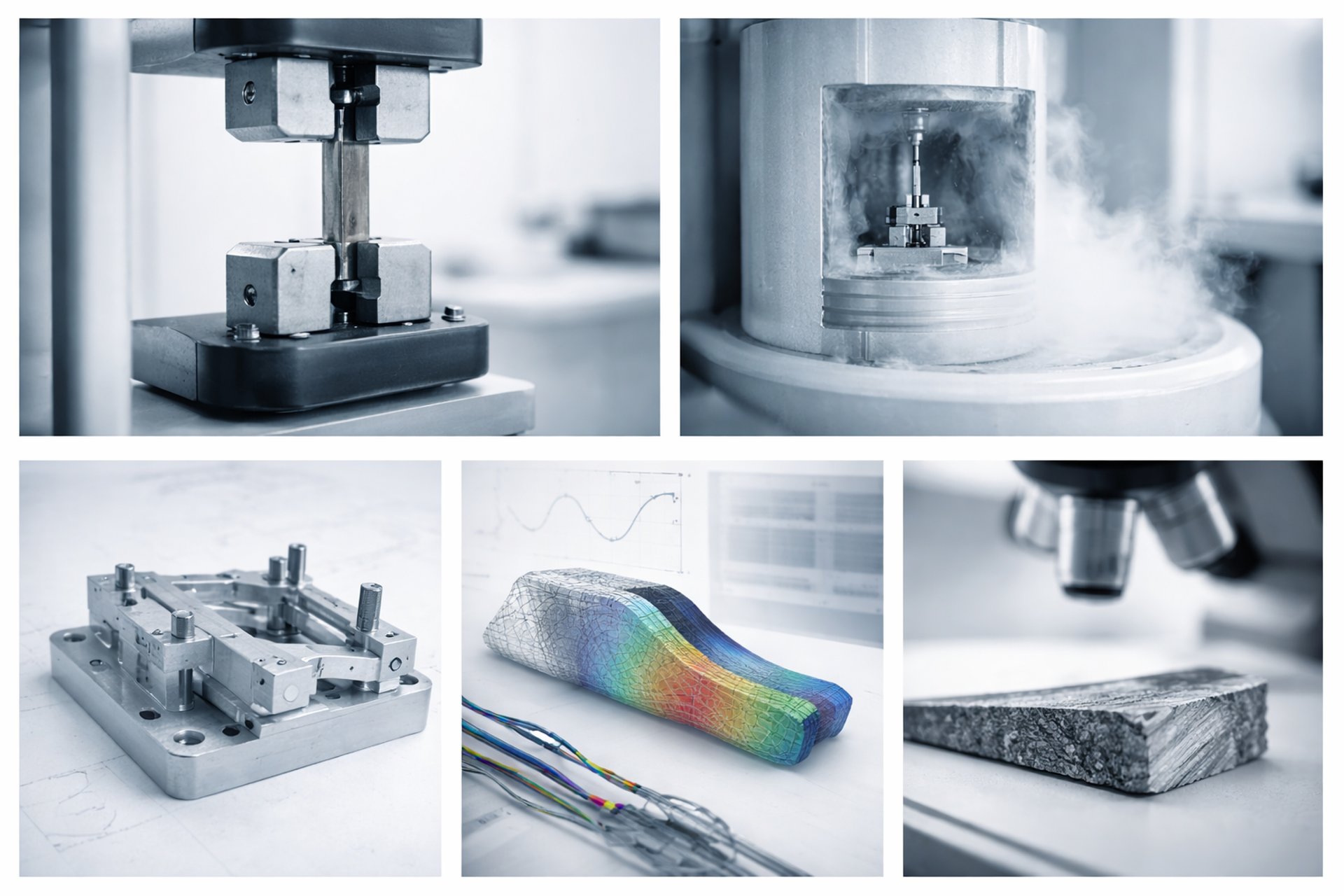
Instrumentation & Failure Analysis
Good decisions come from trustworthy measurements. I focus on building measurement strategies and clean data pipelines so results are consistent, traceable, and easy to compare across temperature, geometry, and material variants.
Instrumentation strategy
Sensor selection and placement for the question being asked:
Load, displacement, strain (and temperature when relevant)
Signal quality:
Noise checks, filtering rules, sampling rate selection, and drift management
Cryogenic considerations:
Cable routing, thermal anchoring, condensation/icing risk, and sensor survivability
Data reduction & reporting
Automated reduction for repeatability:
Stress–strain, modulus, offset strength, nonlinearity metrics, failure point definitions
Consistent plotting + reporting templates:
Same axes, same definitions, same data quality flags
Traceability:
Sample IDs, test conditions, calibration records, and revision control of analysis scripts
Failure analysis mindset
Evidence-based classification tied to geometry and loading:
First failure location, damage progression, and dominant mechanisms
Clear recommendations:
Design changes, process changes, or targeted next tests to retire remaining risk
Typical deliverables
Instrumentation plan + channel list + calibration notes
Data pipeline (repeatable scripts/templates)
Failure mode library (photos + definitions)
Actionable conclusions: what to change and what to test next
Contact
Reach out for custom composite solutions
Mehdi.Ghazimoradi@gmail.com
© 2025. All rights reserved.